23 Jul 2026 Samantha McLauren
What Maczo's No-KYC Shift Means for Crypto-Native Onboarding
Crypto products have spent years trying to make onboarding faster while asking users to pass through increasingly complex identity checks. Maczo is taking a different route. The crypto-native gaming platform says it no longer requires identity documents for users to play or withdraw, and it is pairing that policy with a reduction in broad promotional spending.
The two decisions are connected. Maczo wants to remove routine document friction while using its budget more selectively, directing resources toward people who use the platform rather than accounts created mainly to capture a short-lived bonus.
Why onboarding friction matters
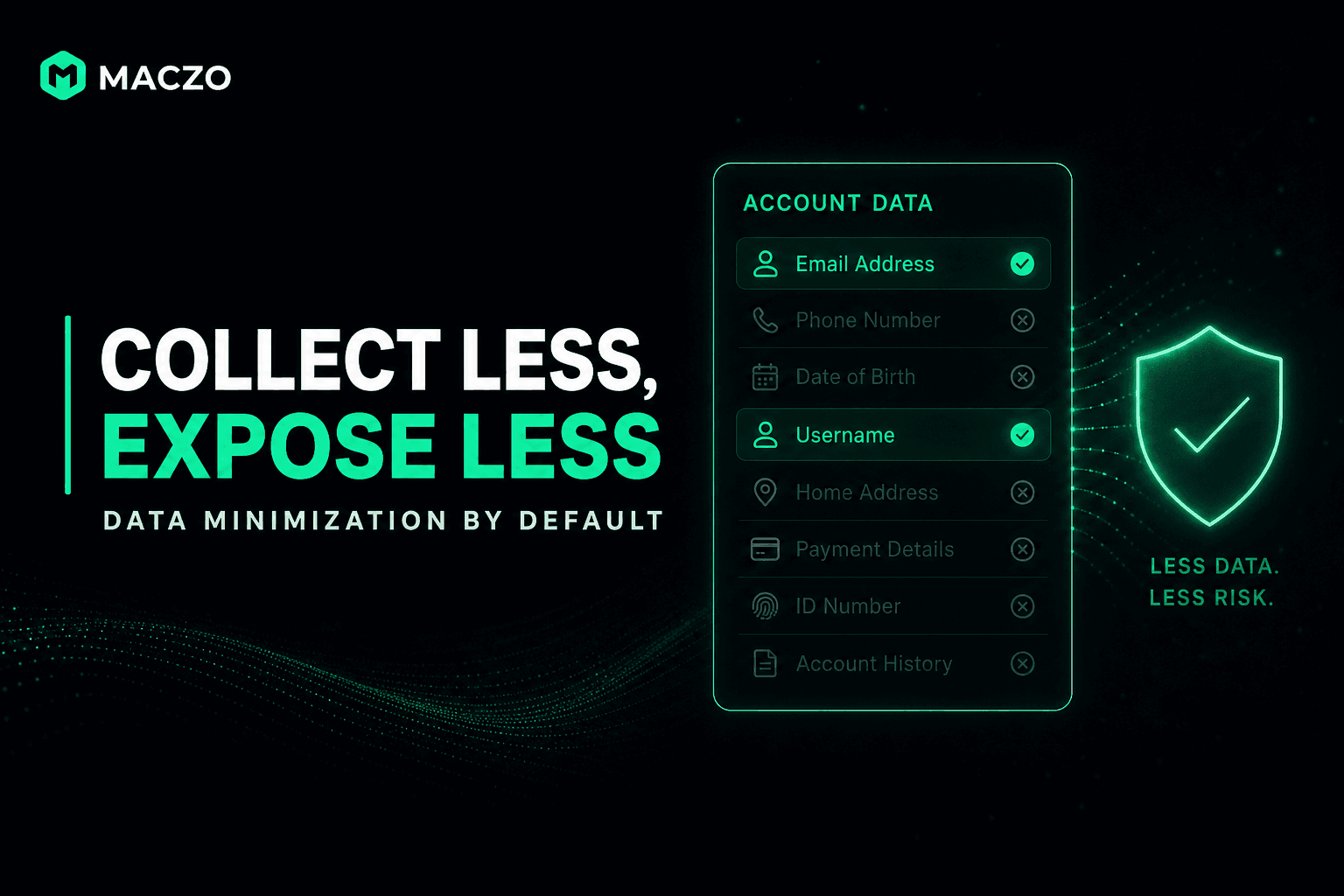
A typical KYC flow asks users to upload an identity document, provide personal details and sometimes wait for manual review. Those steps may serve a compliance purpose, but they also create a large store of sensitive information and can interrupt the experience before a user has even evaluated the product.
For a crypto-native audience accustomed to wallet-based access and fast transactions, that friction is especially visible. The Maczo platform is positioning data minimization as part of the product experience: do not collect an identity document when the standard journey does not require one.
That approach can reduce the amount of sensitive material exposed to storage breaches or document-handling errors. It can also make the relationship clearer. Users still provide accurate registration information and remain responsible for their accounts, but routine access is not conditioned on submitting a passport or similar document.

No document-based KYC, not no controls
The phrase “no KYC” can be misunderstood as a promise of zero oversight. Maczo's policy is more specific. The Maczo Help Center states that identity documents are not requested to play or withdraw, while the platform continues to apply blockchain analytics, sanctions screening, fraud checks and behavioral risk signals.
Transactions associated with suspicious, sanctioned or criminal sources may still be restricted, suspended or rejected. Withdrawals are also intended for wallets controlled by the account owner rather than third parties.
This distinction matters. Removing document-based KYC does not remove anti-money-laundering responsibilities or the need to protect the platform. It changes the toolset from routine document collection for every user to monitoring focused on transaction and behavior risk.
Why Maczo is reducing broad promotions
Maczo is also changing how it spends on acquisition. Large welcome packages can attract attention quickly, but they can encourage multi-account activity, low-risk wagering designed only to unlock rewards and other forms of promotion abuse.
The platform says it would rather reduce that blanket spending and preserve more budget for genuine players. In practical terms, that means fewer offers designed only to generate sign-ups and a greater emphasis on sustainable value, clearer terms and the quality of the underlying experience.
This is not an argument against every promotion. It is an argument for promotions that support meaningful participation instead of rewarding a temporary extraction strategy.
A different model for player value
When a platform relies less on bonus volume, its core product has to carry more weight. Speed, transparency, game quality, support, security and predictable rules become more important than a headline offer.
That trade-off may be healthier for existing users. Promotional costs are not free; they are part of the platform's budget. If a campaign mostly reaches bonus-only accounts, genuine users can end up navigating more restrictive terms without receiving lasting value.
Maczo's decision reframes the discussion. Rather than asking how large a sign-up incentive can be, the platform is asking how much of that spending improves the day-to-day experience of active users.
What the shift could signal for crypto platforms
Crypto adoption has often been described as a contest to remove intermediaries. The next phase may be about removing unnecessary data collection while retaining precise risk controls.
Maczo's model will ultimately be judged by execution: whether its monitoring can stop abuse without recreating the same friction in another form, and whether lower promotional spending produces visible value for players.
Still, the direction is notable. Privacy and budget discipline are being treated as product choices, not slogans. If the approach works, no-document onboarding and more selective incentives could become a stronger competitive position than the familiar combination of lengthy verification and oversized short-term bonuses.
crypto platform